

about onesies, pajamas, and baby toiletries—but many small yet essential items are often forgotten.
These details can make a real difference during your hospital stay. This guide helps you cover
everything and avoid being caught off guard, so you can focus fully on welcoming your baby.

When to pack your hospital bag
It is recommended to have your hospital bag ready by the 34th week of pregnancy.
This allows you to be prepared in case of early or induced labor and helps prevent last-minute stress.
Packing ahead of time also gives you peace of mind and ensures that nothing important is forgotten.

The usual list… and what’s often forgotten
Most hospitals provide an official checklist, but it is often incomplete and doesn’t always
reflect real-life needs after delivery.
Below is a detailed, category-by-category list with a special focus on items that parents
frequently forget.

For baby: essentials and often-forgotten items
Essentials:
- 5 to 6 crossover-style onesies made of 100% cotton.
- 5 to 6 comfortable pajamas.
- 2 hats and 2 pairs of mittens.
- Socks and cardigans or vests.
- A sleep sack (swaddle or sleeping bag).
- A soft blanket.
- Baby wipes and diapers (if not provided by the hospital).
Often forgotten:
- Physiological pacifiers suitable from birth, made of medical-grade silicone.
- A backup bottle, even if you plan to breastfeed.
- Both newborn and 1-month clothing sizes—not all babies weigh 3 kg at birth.
- A small notebook to track feedings, diaper changes, and medical notes.
- A forehead or ear thermometer suitable for babies.
For mom: comfort and recovery
Essentials:
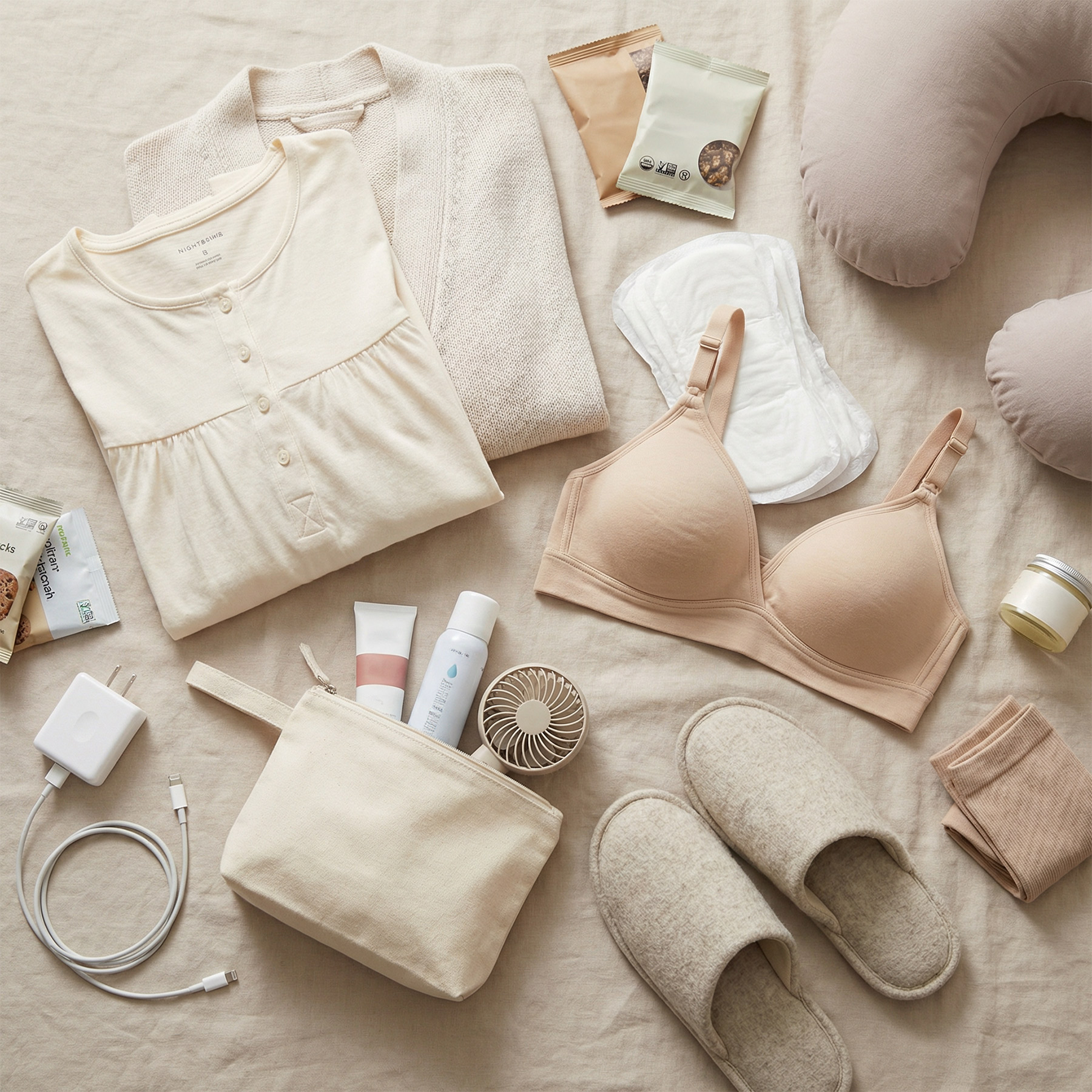
- Front-opening nightgowns or pajamas.
- Disposable or cotton underwear.
- Postpartum sanitary pads.
- Nursing bras.
- Toiletries.
- Slippers and a robe.
Often forgotten:
- A breast pump — just in case breastfeeding needs to be initiated or maintained without direct nursing (temporary separation, latch difficulties… hopefully not, but it’s best to be prepared).
- Thermal spring water spray to cool off during labor.
- A mini fan, especially useful in warm delivery rooms or summer births.
- Nipple cream or balm made with pure lanolin to help prevent cracking.
- Hydrating face or body mist.
- Healthy snacks such as cereal bars or dried fruit.
- Compression socks, useful during extended bed rest.
- A charger with a long cable or a power bank.
- Your own pillow or nursing pillow, often more comfortable than hospital ones.

Administrative documents to remember
- ID card or passport.
- Health insurance card or equivalent.
- Proof of supplementary insurance.
- Family record book or acknowledgment of paternity.
- Pregnancy medical file.
- Birth plan, if you have one.
- A pen for paperwork.
- Baby’s health record, if already in your possession.
Bonus tip: pack two bags
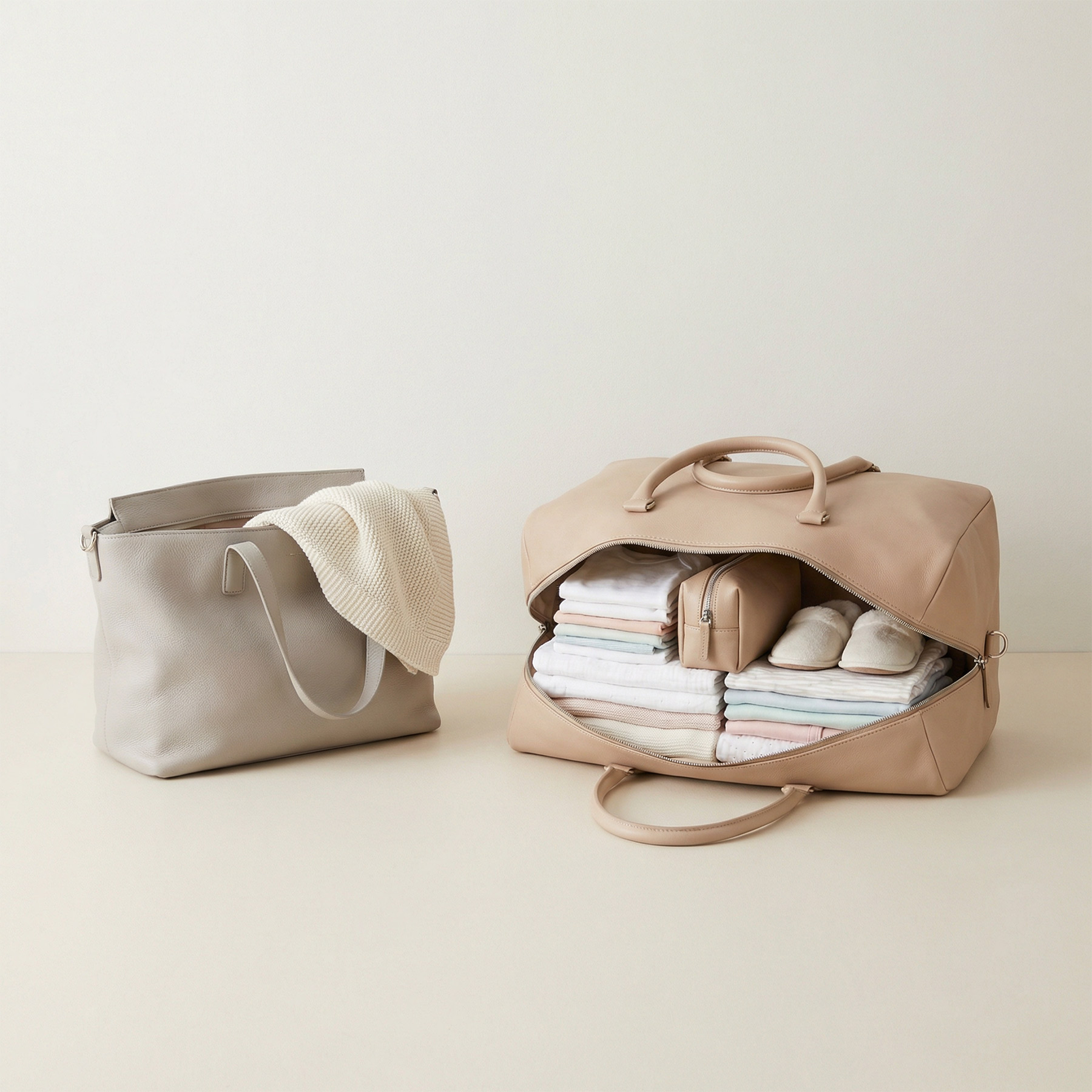
Preparing two separate bags can make your stay much smoother:
- One bag for the delivery room with immediate essentials.
- One bag for the hospital stay with clothes and toiletries.
This helps you avoid digging through a single suitcase at the wrong moment.

Conclusion
Packing your hospital bag isn’t just about baby clothes—it’s your personal comfort kit for
one of the most intense and unforgettable moments of your life.
By paying attention to small, often overlooked details, you can turn a potentially stressful
stay into a much smoother and more comfortable experience. Take the time to prepare it well,
and don’t hesitate to adapt it to your personal needs.