

During the first months of life, an infant’s immune defenses are still immature. Because of the risk of contamination by germs present in milk or on moist surfaces, sterilizing feeding equipment (bottles, nipples, pacifiers…) is an important preventive measure.
But between heat sterilization, cold sterilization, steam, or not sterilizing at all… and changing recommendations, many new parents have questions. Is it really necessary to sterilize everything? Until what age? Every day? Here is a clear guide, without pressure, based on current pediatric recommendations.

Why sterilize?
Bottles, nipples, and pacifiers can be favorable environments for bacterial growth, including:
- Enterobacteria (E. coli, Salmonella)
- Yeasts (Candida albicans)
- Resistant spores if milk has been left sitting too long
The risk is particularly high in cases of:
- Use of powdered infant formula (not sterile at the source)
- Storing prepared or expressed breast milk at room temperature
- Poor equipment hygiene
Goal: reduce microbial load without falling into excessive, anxiety-driven sterilization.

Step 1 – Cleaning (essential)
Before any sterilization, thorough cleaning is essential:
- Rinse with cold water immediately after use
- Wash with hot soapy water using a dedicated brush (bottle + nipple)
- Pay attention to hard-to-reach areas (no milk residue)
- Rinse well with clean water
- Allow to air dry on a clean drying rack
Sterilizing poorly washed equipment is ineffective.
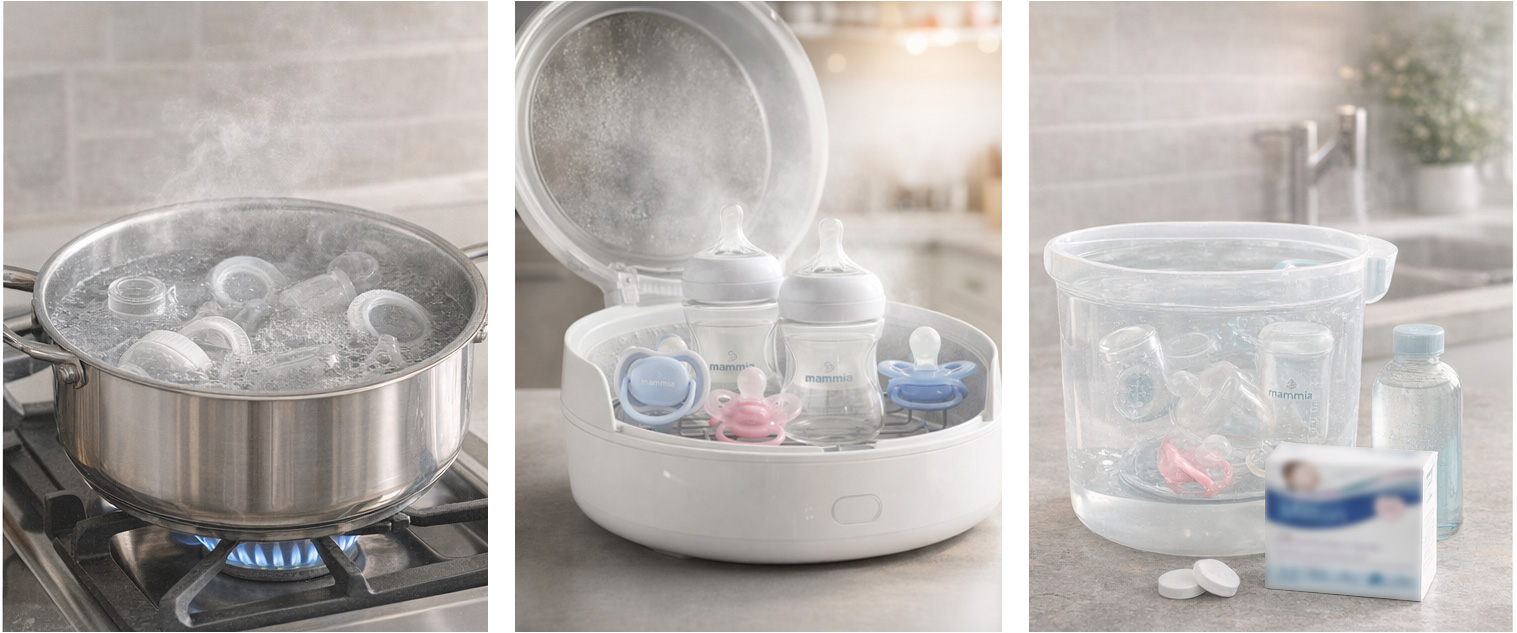
The different sterilization methods
1. Boiling (classic method)
- Place items in a pot of boiling water for 10 minutes
- Drain and allow to dry without wiping
Effective, economical
May weaken some plastics over time
2. Steam
- Using an electric sterilizer
- Or a microwave steam sterilizer (with a little water)
⏱ Average time: 5 to 8 minutes depending on the model
Practical, fast, no chemicals
Always follow the specific instructions for your device
3. Cold sterilization (chemical solution)
- Uses disinfectant tablets diluted in cold water
- Immerse items for 30 minutes
- Do not rinse afterward (safe solution when properly dosed)
Ideal for travel or when electricity is unavailable
Possible residual odor + change the solution every 24 hours
| Child's Age | Recommendations |
|---|---|
| 0 to 3 months | Daily sterilization recommended |
| 3 to 6 months | Sterilize every 2–3 days or during illness |
| 6 months and older | Careful cleaning is sufficient if baby is healthy |
The French Pediatric Society emphasizes that sterilization is not mandatory if proper hygiene practices are followed.
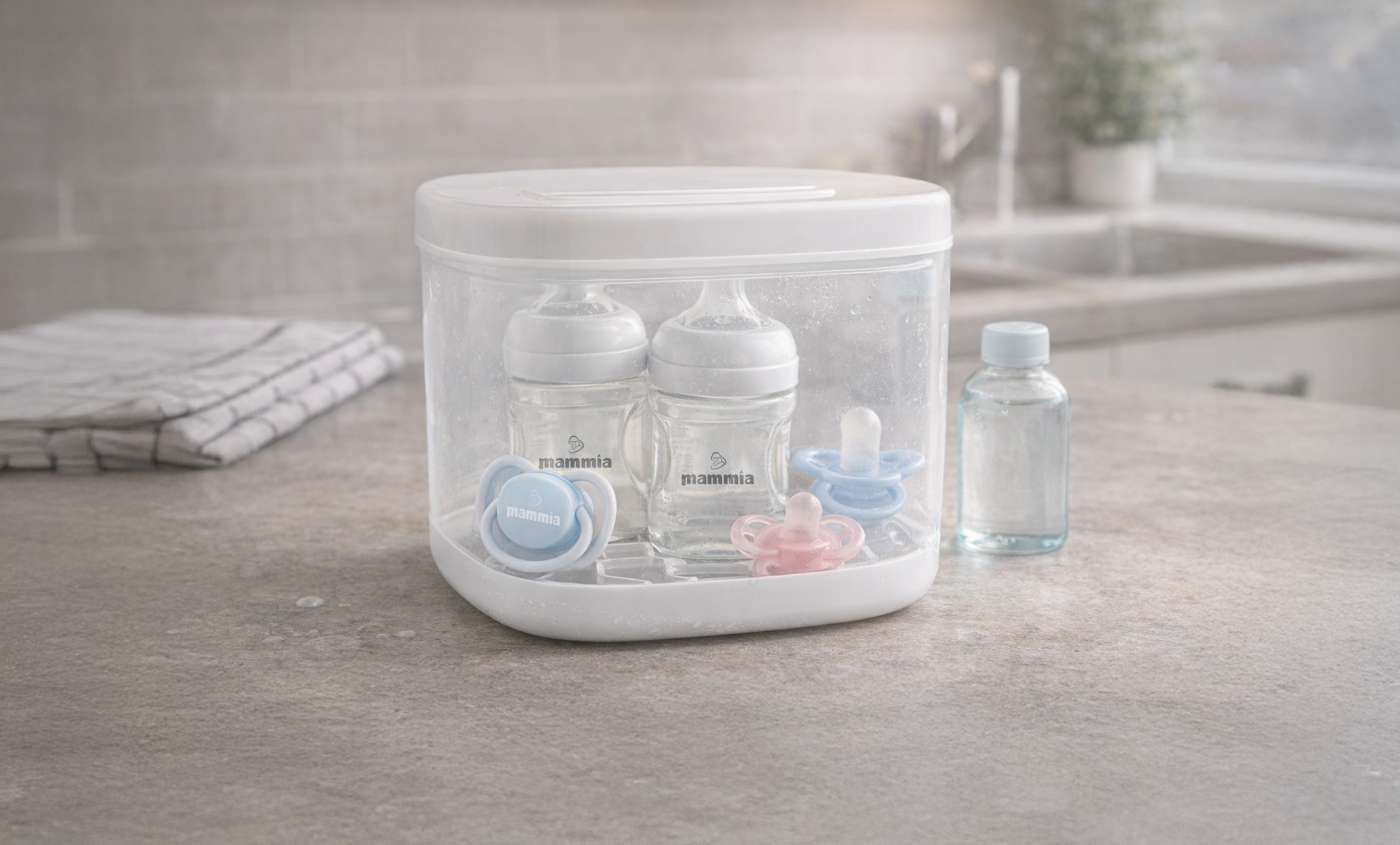
Storage after sterilization
- Do not handle items with unwashed hands
- Store in a clean, airtight container
- Avoid dish towels (source of cross-contamination)
- If stored for later use, rinse again or re-sterilize
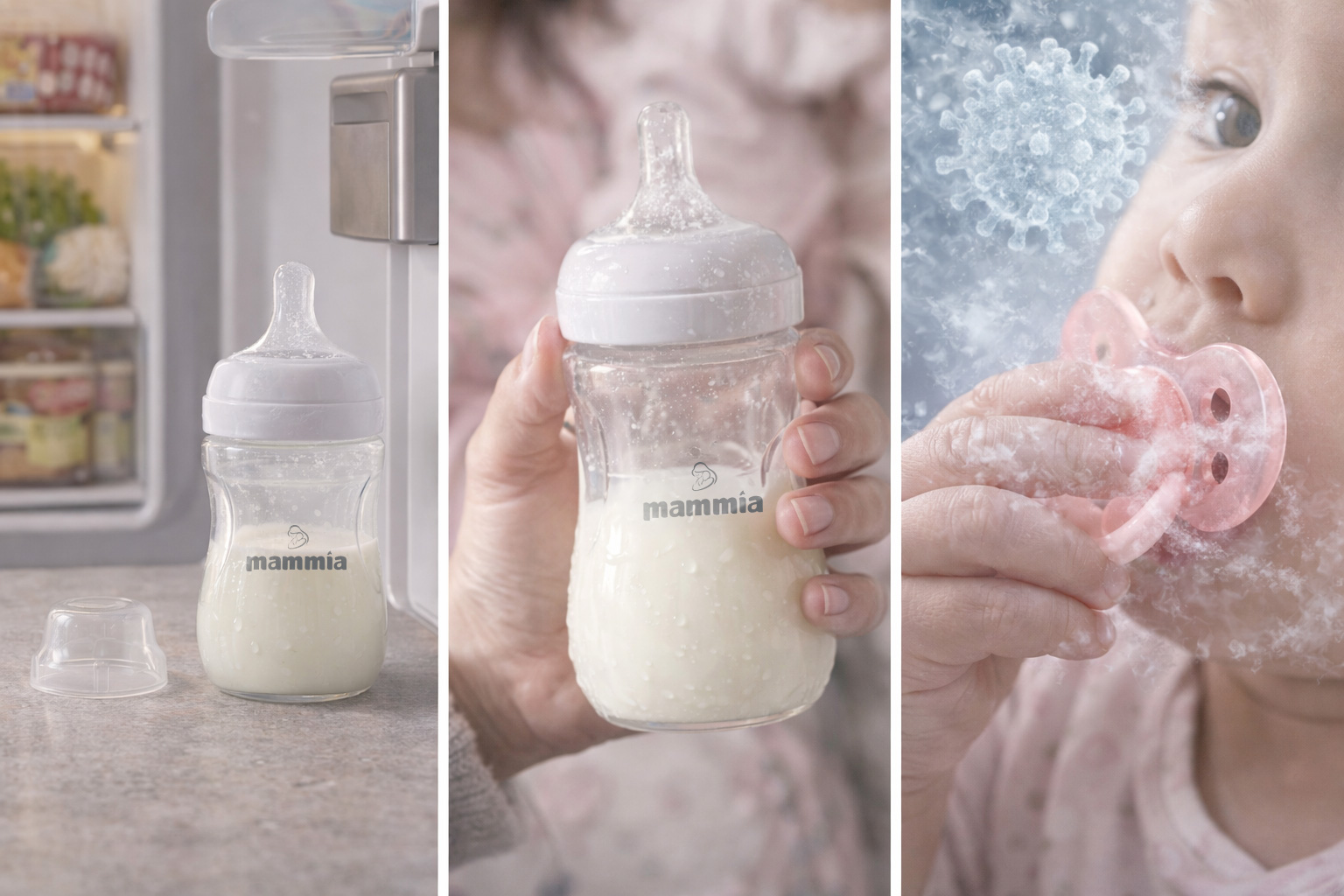
Things to avoid
- Leaving prepared formula out of the fridge for more than 30 minutes
- Reusing a bottle without washing it, even for the same baby
- Freezing a nipple or “cleaning” it in your mouth (risk of cavities or viruses)

Conclusion
Sterilization doesn’t have to be complicated: Thorough cleaning + a method that fits your routine = effective protection. There’s no need to aim for perfection: what matters most is having clean, well-maintained equipment and staying consistent in your routine.
Choose the method that makes your life easier, without overlooking what matters most: your baby’s well-being and safety.
Sources
- French National Authority for Health (HAS) – Prevention of infections in infants
- French Pediatric Society – Recommendations on infant feeding (2022)
- World Health Organization (WHO) – Guidelines for the safe preparation of infant formula
- NHS (UK) – Bottle feeding and sterilising advice
- CDC – Infant feeding and sterilization safety