

how a baby feeds, their comfort, and even the healthy development of their mouth and sucking reflex.
This comprehensive guide will help you understand the essential criteria for choosing a nipple
based on age, flow rate, materials, and technical features, relying on pediatric recommendations
and scientific studies.

Why Choosing the Right Nipple Is Crucial
The first weeks of life are marked by the development of the sucking reflex — a fundamental
yet still immature function in newborns. An unsuitable nipple can lead to:
- Excessive fatigue during feeding.
- Air ingestion leading to colic.
- Bottle refusal.
- Or sucking difficulties.
That’s why selecting a nipple adapted to each stage of a baby’s development is essential.

Age, Flow Rate, and Suction Effort: A Progressive Evolution
There is no universal nipple: a baby’s needs evolve over time depending on the maturity
of their sucking reflex and their coordination between sucking, swallowing, and breathing.
Below is a summary table of commonly recommended flow rates by age:
| Baby’s age | Recommended flow rate |
|---|---|
| 0 months | Newborn flow |
| 1 month | Slow flow |
| 3 months | Medium flow |
| 6 months | Fast flow |
| 6 months (variable) | Variable flow depending on suction effort |
Variable flow nipples are designed to respond to the baby’s suction effort. Milk flows
only when the baby actively sucks, helping regulate intake and reducing the risk of choking.
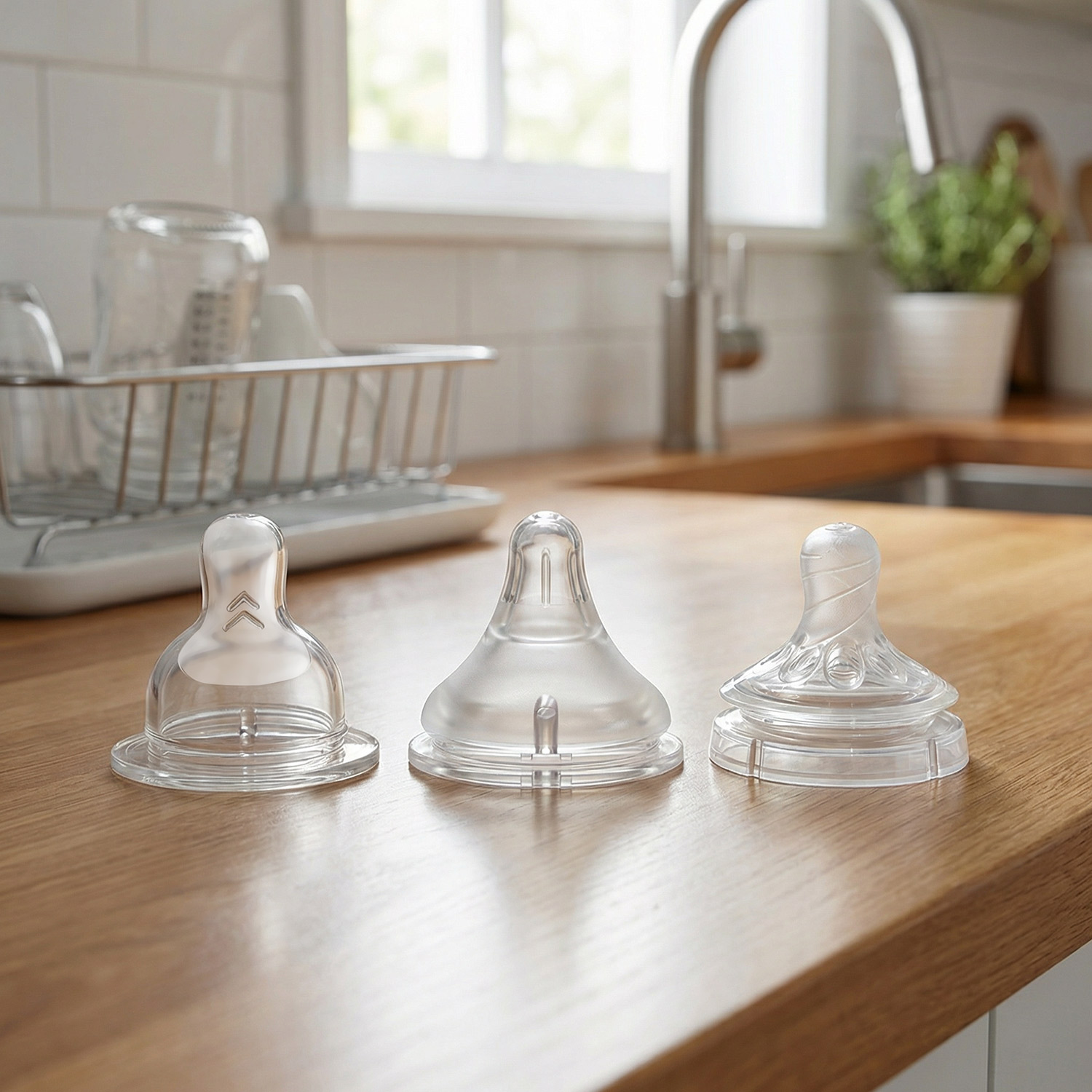
Food-Grade Silicone: The Reference Material
At Mammia, all nipples are made from food-grade silicone, a material widely recognized
for its safety and performance.
- Soft yet durable, closely mimicking the feel of the breast.
- Free from BPA, BPS, and phthalates, in compliance with European standards.
- Easy to sterilize with excellent thermal stability.
Studies have shown that food-grade silicone is well tolerated by infants, as it does not
release harmful substances even after repeated sterilization【1】.
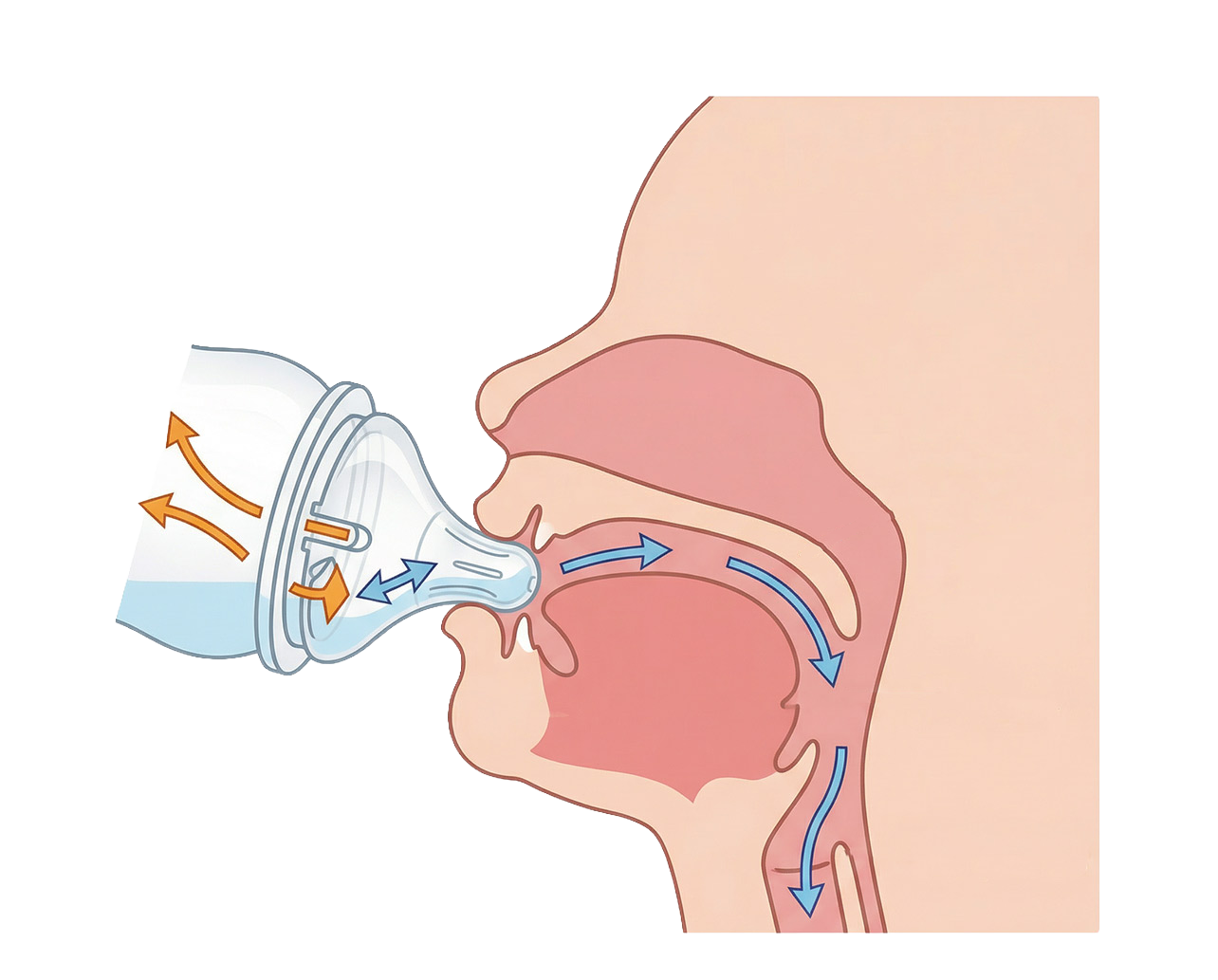
Anti-Colic Nipples: Reducing Air Intake and Discomfort
Mammia nipples are equipped with anti-colic valves designed to reduce air intake during feeding.
- Regulated pressure inside the bottle.
- Smoother and more natural suction.
- Reduced risk of colic, hiccups, and reflux.

Anti-Leak System: Everyday Safety and Comfort
The anti-leak system prevents unwanted spills and improves feeding safety, especially
when babies begin holding the bottle independently.
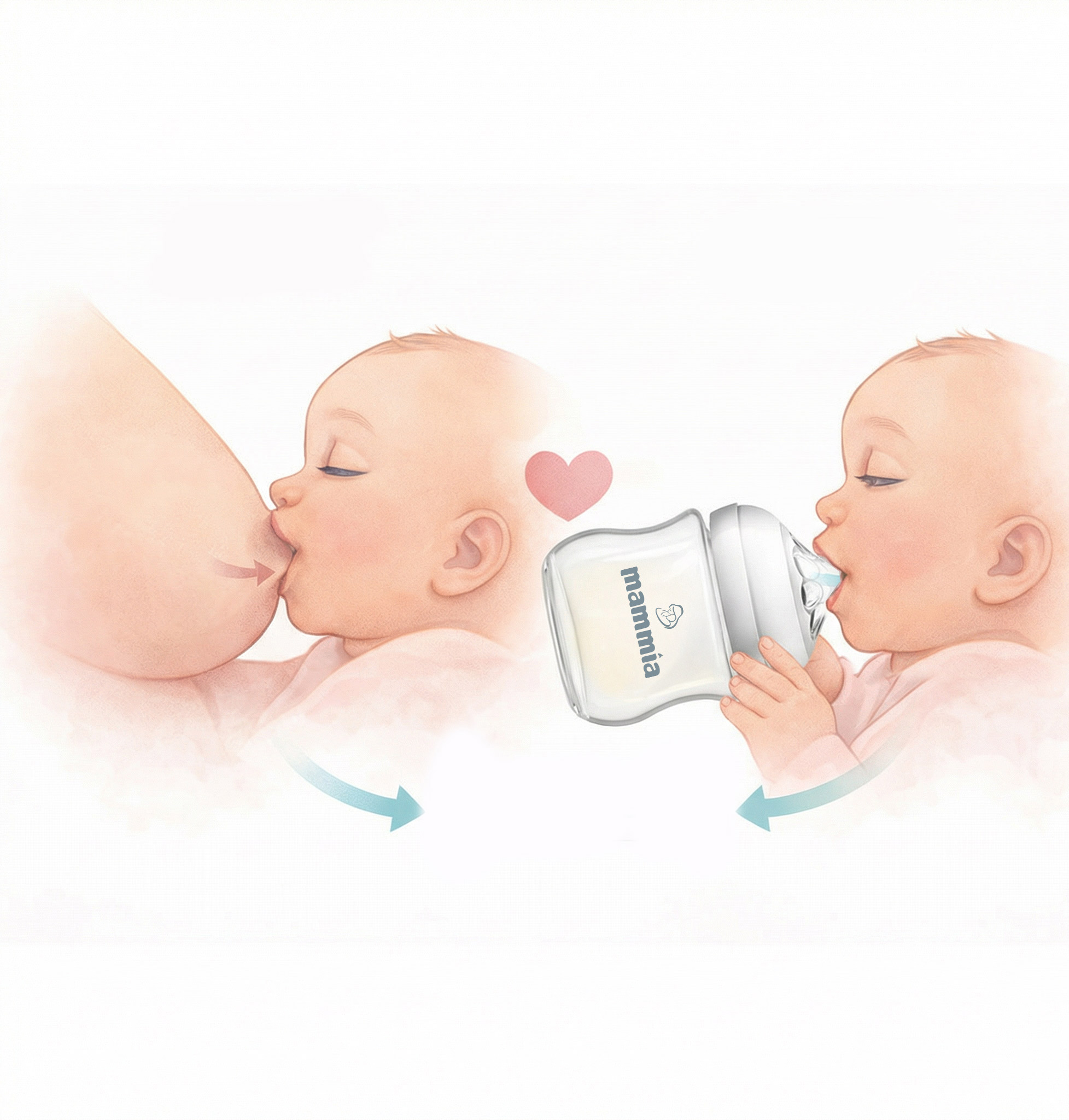
Nipples and Breastfeeding: Supporting a Smooth Transition
Slow-flow nipples promote a sucking pattern closer to breastfeeding and are particularly
recommended when babies alternate between breast and bottle feeding.

Practical Tips for Choosing the Right Nipple
- Observe your baby during feeding,
- Replace the nipple at the first signs of wear,
- Don’t hesitate to test different flow rates.

Conclusion
Choosing the right nipple means supporting calm, comfortable, and safe feeding while
respecting your baby’s natural rhythm.
Sources
- EFSA Journal (2016). Safety assessment of the substance silicone polymers for food contact. 14(10):e04547.
- Nutrition Reviews, Vol. 65(Suppl_1):S135–S138. Management of colic in infants.
- Lucassen PL et al. BMJ (1998). Systematic review of treatments for infant colic. 316(7144):1563–1569.
- Academy of Breastfeeding Medicine. Protocol #5: Supplementation During Breastfeeding.