

Returning to work after the birth of a baby is often an emotional transition—especially for mothers who wish to continue breastfeeding. Between a demanding work schedule, logistical challenges, fatigue, and social pressure, continuing to breastfeed can seem complicated.
Yet research shows that with good planning, proper support, and the right tools, it’s not only possible—it’s beneficial for the mother, the baby, and even the employer.

Breastfeeding and Returning to Work: A Possible Balance
The WHO and UNICEF recommend exclusive breastfeeding for the first six months, and continued breastfeeding up to two years or beyond alongside complementary foods. Returning to work is not incompatible with this recommendation.
Studies show that continuing to breastfeed after resuming work reduces the risk of infections in the child, strengthens bonding, and helps many mothers cope better with daytime separation.

What Science Says About Extended Breastfeeding
- For the baby: Even partial breastfeeding continues to provide antibodies, essential fatty acids, and immune support. It reduces the risk of ear infections, gastroenteritis, and respiratory illnesses.
- For the mother: It lowers the risk of certain cancers (breast, ovarian), supports better hormonal recovery, and can improve mental well-being during the return-to-work transition.
- For society: According to some studies, breastfed children get sick less often, which can reduce parental absenteeism and certain employer costs.

How to Prepare for the Return: Key Steps
Before returning
Begin pumping two to three weeks before going back to work in order to:
- Help your baby get used to a bottle or alternative feeding method.
- Build a small milk stash.
- Get comfortable with your pump (choosing the right one, adjusting settings, routine).
Discuss with your employer
In many countries, laws provide breastfeeding breaks at work—often around one hour per day, split into two breaks, during the child’s first 12 months. Even if not formally arranged, it can help to address the topic openly and respectfully to make planning easier.

Choosing the Right Gear
A discreet, quiet, and portable breast pump can make a big difference. Wearable, hands-free models that fit inside a bra allow mothers to pump more comfortably, even during breaks or while working from home.
Commonly recommended features include:
- Double pumping to save time.
- Low noise level.
- Easy cleaning.
- Compact or hands-free format.

Establishing a Pumping Routine at Work
There’s no need to replicate the exact feeding schedule. Pumping every three to four hours is generally enough to maintain milk supply.
- One session in the morning before leaving home.
- One or two sessions at work (mid-morning and/or afternoon).
- Nursing as soon as you return home, plus on-demand breastfeeding at night and on weekends.
Some mothers choose to pump only once a day and continue nursing directly outside working hours. Each routine can be adjusted to fit the mother’s and baby’s needs.
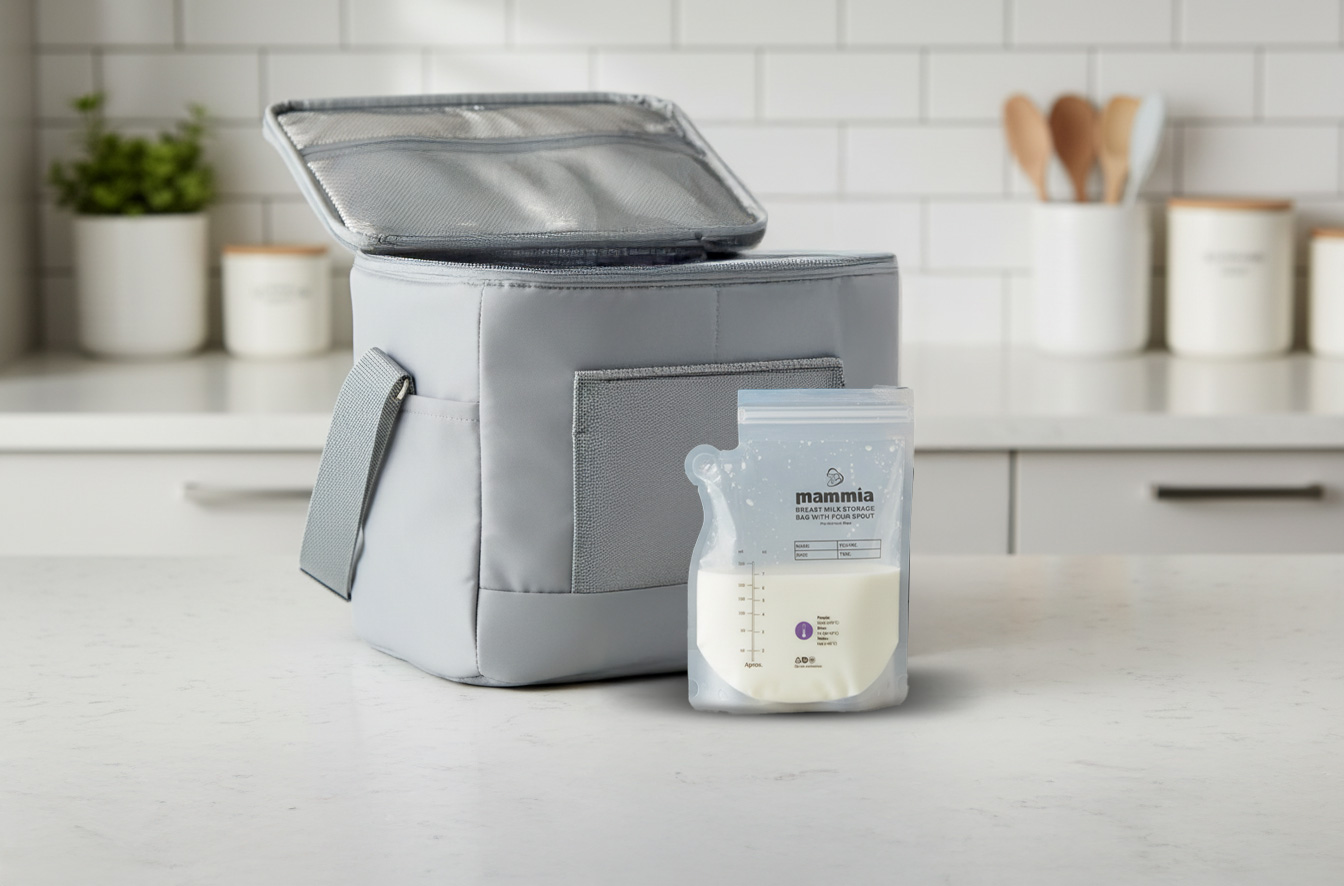
Milk Storage and Transport Logistics
A cooler bag or insulated tote with an ice pack allows safe storage of expressed milk during the day. Once home, milk can be refrigerated or frozen.
- Up to 4 hours at room temperature (≤25°C).
- Up to 4 days in the refrigerator.
- Up to 6 months in the freezer.

Emotional Realities and Social Pressure
Returning to work while breastfeeding can mean dealing with comments, exhaustion, or feelings of isolation. It can be helpful to talk about it, build a support system, and seek help if needed (lactation consultants, parent groups, supportive pediatricians).
Some mothers stop breastfeeding when they go back to work. Others continue nursing only in the mornings and evenings, while some pump at work for several months. There is no right or wrong way—only what works best for you and your baby.
Practical, Evidence-Based Tips
- Start pumping before returning to work.
- Choose a comfortable, suitable breast pump.
- Stay flexible—your routine may evolve.
- Prioritize comfort and discretion.
- Trust your body—milk supply adapts.
- Ask for help if needed.
Scientific Sources
- WHO & UNICEF. (2023). Breastfeeding Recommendations.
- Victora CG et al. (2016). Breastfeeding in the 21st century. The Lancet.
- Bartick M et al. (2013). The impact of paid maternity leave on breastfeeding outcomes. Pediatrics.
- Kent JC et al. (2012). Effect of breast pump type on milk production. Journal of Human Lactation.
- Johns Hopkins Medicine. (2021). Working and Breastfeeding.
- Mirkovic KR et al. (2014). Barriers to workplace support for breastfeeding: An integrative review. Journal of Human Lactation.
- Academy of Breastfeeding Medicine. (2017). Clinical Protocol #8: Human Milk Storage Information for Home Use for Full-Term Infants.